
Autism Assessments for Adults and Children
Dr Debbie Smith and her team offer private autism assessments, to help you or your child make sense of why things have felt so hard
Our assessments follow NICE guidelines, and we provide gold standard assessments and reports
Seen within 10 working days | Report within 25 working days of your final appointment | Adults, and children from age 2 and a half
Have you always felt different to others?
Perhaps you have felt not good enough, or quirky, or burnt out. You may have wondered why everyone else seems to know what to do and you don’t. You might have been described as shy, overly sensitive, difficult, a drama, a perfectionist or logical.
If any of this sounds familiar, a private autism assessment can help you understand yourself, and make sense of why things have felt so hard.
We don’t have a waiting list. We can usually see you within 10 working days, with evening and weekend options. Assessments can take place at our clinics in Northampton and London, remotely, or for children, at home. Make an enquiry or call us on 01604 434367.
Could it be autism?
Everyone is different, but there are some experiences that people with a diagnosis of autism often find in common. You can also read the NHS guide to autism.
- Collecting and special interests: you may have enjoyed collecting things, such as toys, Lego, miniatures, tea cups or stamps.
- Feeling overstimulated: by light, noise, textures, crowds or demands.
- Misunderstandings: neurotypical social rules, facial expressions and indirect communication can be hard to read. This can lead to friction in friendships, relationships and families.
- Isolation: many people withdraw or feel deeply lonely, because socialising takes so much mental energy and sensory endurance.
- Sensory overload: open-plan offices, fluorescent lights, loud classrooms or unexpected changes to plans can lead to physical tension, meltdowns or shutdowns.
- Executive function: time blindness, moving from one task to another, or switching between tasks can make work and daily life harder, even when you are highly skilled or intelligent.
Autism is one part of who someone is. It is never the whole of a person’s identity.

A diagnosis of autism as an adult
Receiving a diagnosis of autism later in life often brings grief for the years spent struggling without help. Many people grieve the years they spent blaming themselves, masking, or getting through life without the support they needed.
At the same time, it brings immense relief. The weirdness, the exhaustion and the past struggles stop being personal failures, and start to make sense. Many of the people I see find a renewed self confidence once they understand how their mind works.
You don’t need to be certain before getting in touch. Some people suspect they may have autism or be neurodiverse, some are simply curious, and some feel they need to understand themselves better. All of these are good reasons to ask.

Autism assessments for children
For children, an assessment is about understanding. It can help your child, and everyone around them, make sense of how they experience the world.
A diagnosis can help:
- put strategies in place at school or in other educational settings
- with practical adjustments, such as leaving the classroom before the crowds
- you as parents build insight and understanding, so you can help your child accept, understand and work with their needs
We assess children from the age of 2 and a half, although we recommend 4 and over. We can carry out children’s assessments at home, where your child feels most comfortable.
Who carries out your autism assessment

Dr Debbie Smith
I’m Dr Debbie Smith, a Counselling Psychologist registered with the HCPC. I have over 25 years of experience and trained on Harley Street. The other members of our team also have a lot of experience, and we all trained on Harley Street. I oversee every assessment we do.

Su-Ann Stewart
Su-Ann is a Neurodevelopmental Clinician and Child and Adolescent Mental Health Specialist (MSc, PMC, BSc). She carries out our autism assessments for adults and children. Su-Ann is trained in the ADOS-2 by Compass Psychology, and in ADHD assessment by the Harley Street Mental Health team, and has over 8 years of experience with autism.

Our assessments follow NICE guidelines for adults and for children and young people, the national guidance on how autism assessments should be carried out, and we provide gold standard assessments and reports.
What happens in an autism assessment
If you think you or your child may be autistic and would like it understood, here is what to expect.
Step 1: A first conversation
A relaxed chat about what’s brought you here, with time to answer your questions. This takes around 10 to 20 minutes.
Step 2: Questionnaires and background
We’ll ask you to complete some questionnaires, including the AQ-10, about your background and everyday life. You can complete these at home and share them with us whenever suits you. Sometimes we’ll also ask someone who knows you well, or your child’s school, to contribute.
Step 3: The assessment
Using the ADOS-2 and the DSM-5 criteria, the assessment is carried out in two main stages. The first appointment can be as quick as 2 days away, and the second as quick as 7 days after that. It can take up to 4 hours in total, over 2 or 3 sittings, especially for a child.
Step 4: Your feedback
We’ll talk you through the outcome and how we reached it, with plenty of time for questions.
Step 5: Your report
You’ll receive a detailed written report within 25 working days of your final appointment. The report belongs to you, or to your child. We will not share it with anyone else. Who you share it with is your choice.
Autism assessments in Northampton, London, online and at home
Northampton
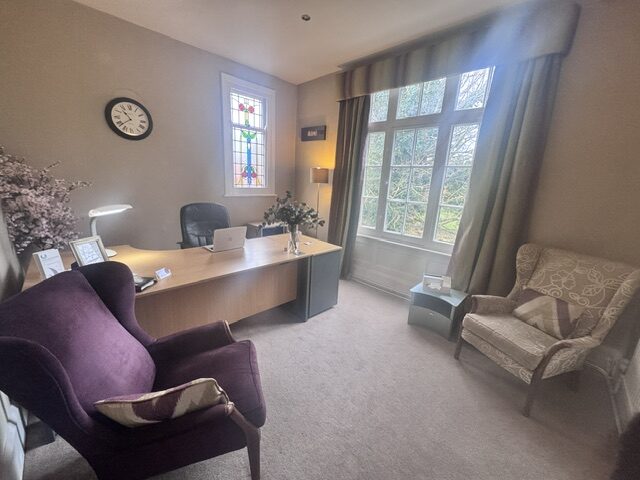
Willow Tree Clinic, 4 Spencer Parade, Northampton NN1 5AA
London

53 Davies Street, Mayfair, London W1K 5JH. I still have a strong connection with Harley Street, although I don’t use a regular clinic room there. Find our clinics
Online

All of our assessments can be carried out remotely, or in person. For children, assessments can also take place at home, where they feel most comfortable. About online therapy
After an autism assessment
However the assessment turns out, you will not be left with a report and nothing else.
- If you receive a diagnosis: there is support available, including 1 to 1 sessions, or a follow-up appointment to understand things better. Individual sessions are available for adults and children.
- If you don’t receive a diagnosis: you’ll still have a full feedback session explaining what we found. Sessions can still be offered to better understand autism-related characteristics, and to see where we can best offer support.
- Who is told about the outcome: once your assessment and report are complete, we will speak with you and talk you through the outcome and how we reached it. You will then receive the report. The report belongs to you, or to your child. We will not share it with anyone else. Who you share it with is your choice.
Autism and ADHD together
Autism and ADHD often go hand in hand. If you think both might apply to you or your child, we can assess for both together. A combined autism and ADHD assessment costs £1,200. You can read about our ADHD assessments.
Fees
Adult autism assessment
£950
Child autism assessment
£950
From age 2 and a half
Combined autism and ADHD assessment
£1,200
Some private health insurers and enhanced corporate schemes cover the cost, depending on the policy. Many have their own approved list of providers, so please check with yours before booking. See how to pay.
Questions about autism assessments
How much does an autism assessment cost?
An adult autism assessment costs £950 and a child autism assessment costs £950. A combined autism and ADHD assessment costs £1,200. You can pay in one or two instalments, however the full fee must be paid before the assessment. A date can be fixed before payment.
How long until I can get an appointment?
We don’t have a waiting list. We can usually see you within 10 working days, with evening and weekend options. The first appointment can be as quick as 2 days away, and the second as quick as 7 days after that.
How long does the assessment take?
It is carried out in two main stages, and it can take up to 4 hours in total. It can be done in 2 or 3 separate sittings, especially for a child. Your report is completed within 25 working days of your final appointment.
Where will I need to go?
Our clinics are in Northampton and London. All of our assessments can also be carried out remotely, and for children, at home.
What ages do you assess?
We assess children from the age of 2 and a half upwards, although we recommend 4 and over. We also assess adults.
What if I don’t get a diagnosis?
You’ll still have a full feedback session explaining what we found. Sessions can still be offered to better understand autism-related characteristics, and to see where we can best offer support.
Who will be told about the outcome?
Once your assessment and report are complete, we will speak with you and talk you through the outcome and how we reached it. You will then receive the report. The report belongs to you, or to your child. We will not share it with anyone else. Who you share it with is your choice.
What support is there afterwards?
If you receive a diagnosis, there is support available, including 1 to 1 sessions, or a follow-up appointment to understand things better. Individual sessions are available for children and adults.
Will I have to take medication?
No. There is no medication for autism itself. An assessment is about understanding you. If ADHD is also identified, medication may be one option you can discuss, and the choice is always yours.
Will the NHS accept my diagnosis?
Our assessments follow NICE guidelines, and you’ll receive a detailed report you can share with your GP.
Get in touch
If you’d like to talk things through before booking, we’re here to help. Call 01604 434367 or 07967 528 215, email therapy@debbiesmith.info, or use the form below and a member of our team will be in touch.